What Is a Butterfly Drone? How Bionic Flying Butterflies Work
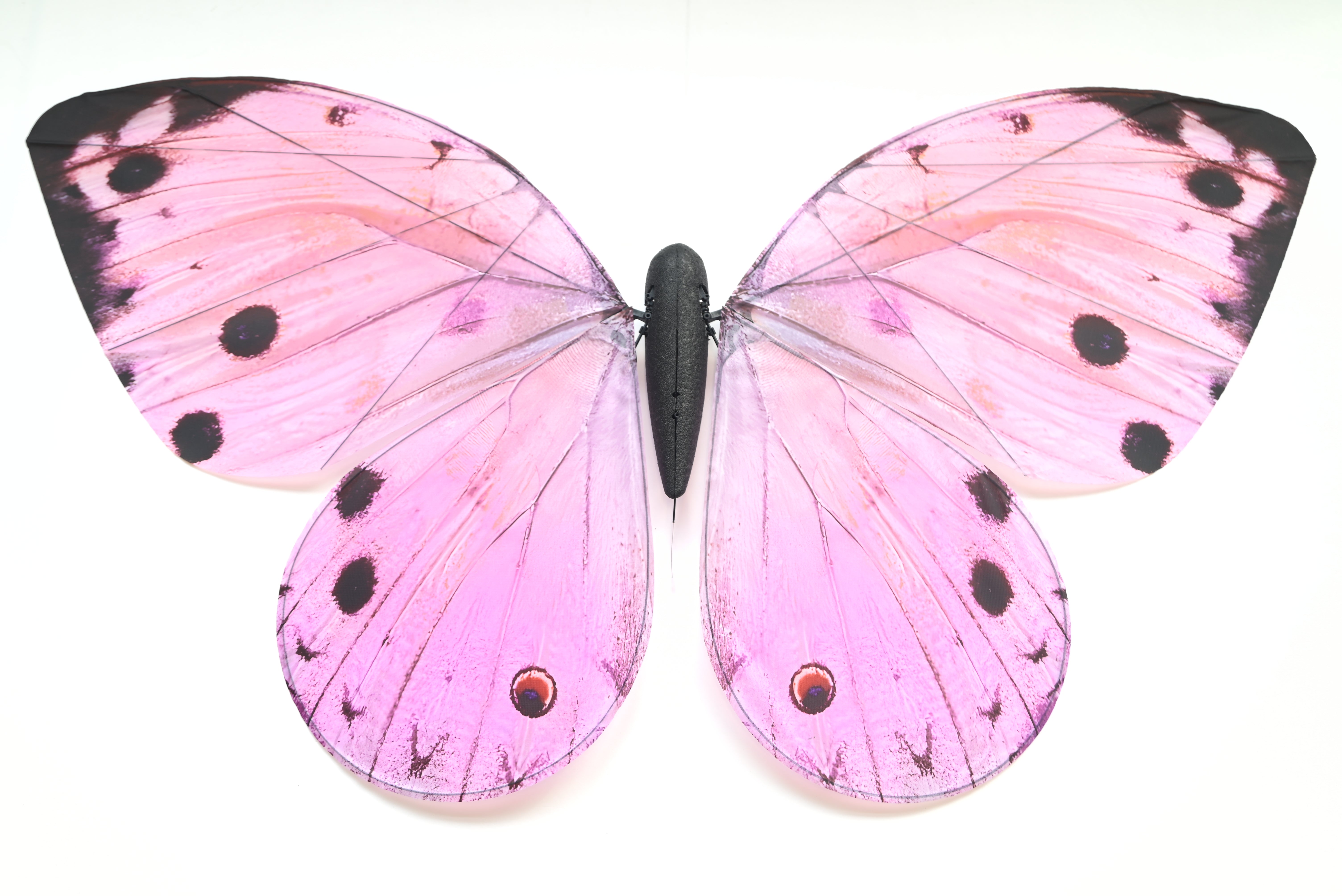
Cover image (featured): cyranthos.com CDN — official product photo. Alt: "Bionic butterfly remote control aircraft with butterfly-pattern wings."
What Is a Butterfly Drone? How Bionic Flying Butterflies Work
A butterfly drone is a remote control aircraft that flies by flapping its wings, the way a real butterfly does, instead of spinning propellers like a quadcopter. The result looks less like a machine in the air and more like a living butterfly — wings beating, drifting, and gliding across the room. That single difference in how it flies is why bionic butterfly drones have become popular for weddings, proposals, stage shows, and family play.
This guide explains how a flapping-wing butterfly drone actually works, what flying one involves, how long the battery lasts, and how it compares with a regular camera drone — using the Cyranthos Bionic Butterfly Remote Control Aircraft as the reference model throughout.
How Does a Butterfly Drone Work?
A butterfly drone belongs to a family of aircraft called ornithopters — machines that generate lift and thrust by flapping wings rather than by rotating propellers. Where a quadcopter hovers on four columns of fast-moving air, a bionic butterfly drives its two wings through a small motorized mechanism, shaping each wingbeat to push against the air more the way an insect does.
Three parts make the flight possible:
- Flapping-wing drive. A small motor inside the body drives the wings through a geared mechanism. The wings themselves are lightweight film stretched over a flexible frame, so they flex naturally on each stroke.
- Radio control link. A 2.4GHz remote control sends your commands to the aircraft, so you can start and stop the wingbeats, manage throttle, and steer left or right in flight.
- Flight battery. A compact rechargeable battery powers the wing drive. Because the wings — not propeller speed — do most of the work, the aircraft can stay remarkably light.
The Cyranthos bionic butterfly weighs just 70 grams, roughly the weight of a few sheets of paper plus an envelope. That low weight is central to both how it flies and where it can fly: gentle wingbeats carry it through indoor spaces, and per the manufacturer it can also handle outdoor flight in light wind.
What's in the Box: Batteries, Controllers, and Wings
The reference model ships as a flying kit, and a few details are worth knowing before your first flight:
- Two flight batteries, used in rotation. Each battery is rated 260mAh, 7.6V, 1.85Wh (50C). While one battery flies, the other can sit in the included Type-C charger — the manufacturer's quick-start guide shows both batteries charging from any standard 5V USB charger, such as a phone charger. When the first battery runs down, you swap them and keep flying.
- Your choice of controller. Two styles are available: a one-handed grip controller and a two-handed dual-stick transmitter (a HotRC HT-10A 2.4GHz system on the reviewed configuration). Both use the same control logic — what changes is how it sits in your hands. Pick whichever matches your habit; if you've flown RC planes or drones before, the dual-stick will feel familiar.
- Wings you attach before flight. The wings mount to the drive mechanism with two screws, and per the quick-start guide the wing angle is factory-set — you install, not adjust. The whole assembly takes a few minutes and is covered step by step in the included guide.


What Flying a Butterfly Drone Is Actually Like
Honest answer first: a butterfly drone is not a hover-in-place appliance. It flies like the insect it imitates, and the manufacturer is upfront that it takes several practice sessions to fly steadily. If you go in expecting a toy-grade quadcopter experience, the first ten minutes may feel unfamiliar; if you treat the first flights as practice, it comes together quickly.
The official quick-start guide breaks a flight into four phases:
- Launch. Hold the butterfly at its marked grip point, raise it as high as you can with the head angled slightly up, tap the flap switch on the back of the controller, and toss it forward at an angle. Takeoff throttle starts at gear 5; you can add 2–3 gears for a stronger launch.
- Climb and trim. Let it stabilize before steering. Small stick inputs matter: push gently forward or pull back for shallow dives and climbs, and release the stick once the maneuver is done.
- Turning. Once you have some altitude, hold the stick lightly left or right through the turn, then release to resume straight flight. Sharp turns bleed altitude, so add a little climb while turning if you're carving aggressively.
- Landing. Descend to a low hover, tap the flap switch to stop the wings, and the butterfly glides gently down to the floor. The guide also gives one safety habit worth keeping for life: if you crash or lose control, stop the flapping immediately.
Two care habits from the manufacturer complete the picture. First, keep flights to about five minutes at a time and let the motors cool down between flights. Second, don't judge battery life too precisely: the listed 5–10 minutes of flight per charge is an estimate, and brighter LED settings drain the battery faster than dimmer ones. The two-battery rotation exists precisely so a cool-down break costs you no flying time.
LED Butterfly Drones: Built for Evenings and Events
The LED version is where this category stops being a hobby toy and starts being a show instrument. The wings carry addressable LED strips along their frames, so in a dim room the aircraft traces its own flight path in light — every wingbeat and glide visible from across the room.

Typical settings, per the manufacturer: wedding entrances and ring deliveries, marriage proposals, stage performances and concerts, exhibitions, and family activities. Multiple wing colors are available, and custom wing graphics or logo printing can be arranged for branded events. Replacement LED light strips, batteries, chargers, and a hard carrying case are sold separately in the butterfly accessories collection if you want spares for event work.
Butterfly Drone vs. Regular Drone: Which One Do You Need?
| Bionic butterfly drone | Typical camera drone | |
|---|---|---|
| Lift | Flapping wings (ornithopter) | Rotating propellers |
| What it looks like in the air | A living butterfly; wings beat and glide | A machine holding a hover |
| Camera | None by design — privacy-friendly for events | Core feature |
| Best at | Close-range spectacle, indoor events, light-wind outdoor flight | Aerial photography, distance, wind resistance |
| Skill curve | Practice needed for steady flight | Beginner modes widely available |
The two aren't competitors. If your goal is aerial photos or long-range flight, a camera drone wins. If your goal is the effect — guests looking up to see where a butterfly goes — the bionic butterfly is the tool built for it.
Frequently Asked Questions
How long does a butterfly drone fly on one charge?
Approximately 5–10 minutes per charge, per the manufacturer. The LED version drains faster at higher brightness settings, and the kit includes two flight batteries (260mAh, 7.6V, 1.85Wh each) so one can charge while the other flies. The manufacturer also recommends resting the motors after each roughly five-minute flight.
Is a butterfly drone hard to fly?
It has a genuine learning curve: expect several practice sessions before flying steadily, per the manufacturer's own guidance. Launches are a toss-and-flap technique rather than a throttle-up, and small stick inputs work best. The two controller styles share identical logic, so you can choose the grip that suits you without relearning anything.
Can you fly a butterfly drone outdoors?
Yes, in light wind conditions, per the manufacturer. At 70 grams it is an ultralight aircraft, so calm evenings are the right setting — and its slow, gliding flight style is easiest to control without gusts.
Does a butterfly drone have a camera?
No. The Cyranthos bionic butterfly is deliberately camera-free, which the manufacturer lists as a privacy-friendly feature for weddings, venues, and family settings.
How much does a bionic butterfly drone cost?
The bionic butterfly Cyranthos model starts at $460, which positions it above toy-grade flapping flyers and in event-grade territory — consistent with its swappable battery system, dual controller options, LED system, and customization support. Check the product page for current pricing and availability.
Ready to see one fly? Explore the Bionic Butterfly Remote Control Aircraft, or browse the LED lighting collection to build out the full event atmosphere.